
The Dispatch
Weekly Insights into Society & Politics (February 2026- Edition 24)

From Vision to Reality
India’s AI Impact Summit 2026 Envisions AI Future for Global South
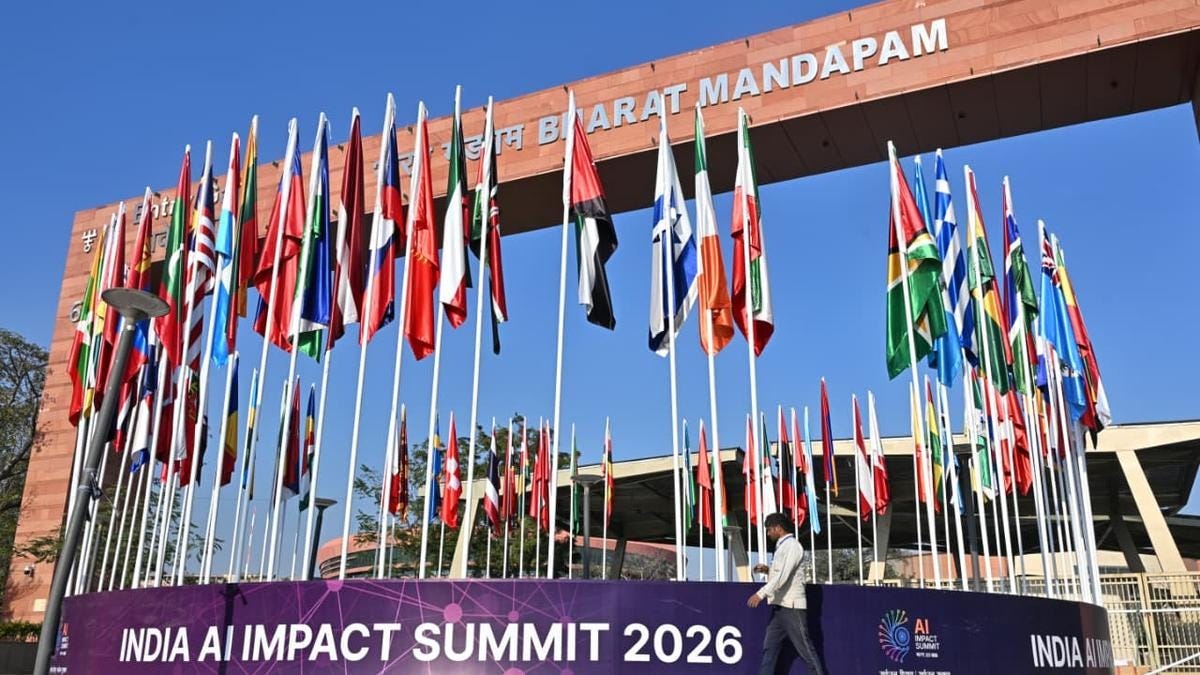
India, the land of culture and innovation, witnessed the magnificent conglomerate of global leaders, technocrats, and global policy makers. The event is India’s AI Impact Summit 2026, which kicked off with a bang.
The India-AI Impact Summit 2026 commenced on 16th February 2026 with a powerful vision, placing India’s youth at the heart of the nation’s Artificial Intelligence (AI) journey. Far from a futuristic dream, the Summit spotlights AI as a transformative force already reshaping jobs and livelihoods.
The India-AI Impact Summit 2026, held at Bharat Mandapam and organised by the Ministry of Electronics and Information Technology (MeitY), represents a strategic shift in the global Artificial Intelligence discourse. As the first major AI summit of its scale to be hosted in the Global South, it reflects India’s emerging role not merely as a technology adopter but as a norm-shaper in advancing inclusive and development-oriented AI frameworks.
Convened under the IndiaAI Mission, the Summit moves beyond the dominant global emphasis on “AI Safety” to foreground the paradigm of “AI for Development and Impact,” positioning AI as a tool for socio-economic transformation, public service delivery, and equitable digital growth across emerging economies.
‘India’s AI Moment’
Ashwini Vaishnaw, Union Minister for Electronics and Information Technology, announced that India will expand its national compute capacity beyond the existing 38,000 Graphics Processing Units (GPUs), with an additional 20,000 units to be added in the coming weeks. More than a technical upgrade, the move signals India’s intent to strengthen its sovereign AI infrastructure and emerge as a leading global AI power.
The announcement came on the second day of the Summit, themed Sarvajan Hitaya, Sarvajan Sukhaya—Welfare for All, Happiness for All—at Bharat Mandapam. The proposed expansion marks the next phase of India’s AI strategy, combining enhanced compute capacity with responsible and development-focused deployment.
Unlike models where advanced AI infrastructure remains concentrated within a few private corporations, India’s approach—anchored in the ₹10,300+ crore IndiaAI Mission—focuses on widening access to innovation. By making over 38,000 high-end GPUs available at subsidised rates of ₹65 per hour, the Mission lowers compute barriers for startups, researchers, students, and public institutions, reinforcing India’s commitment to democratising AI for national development.
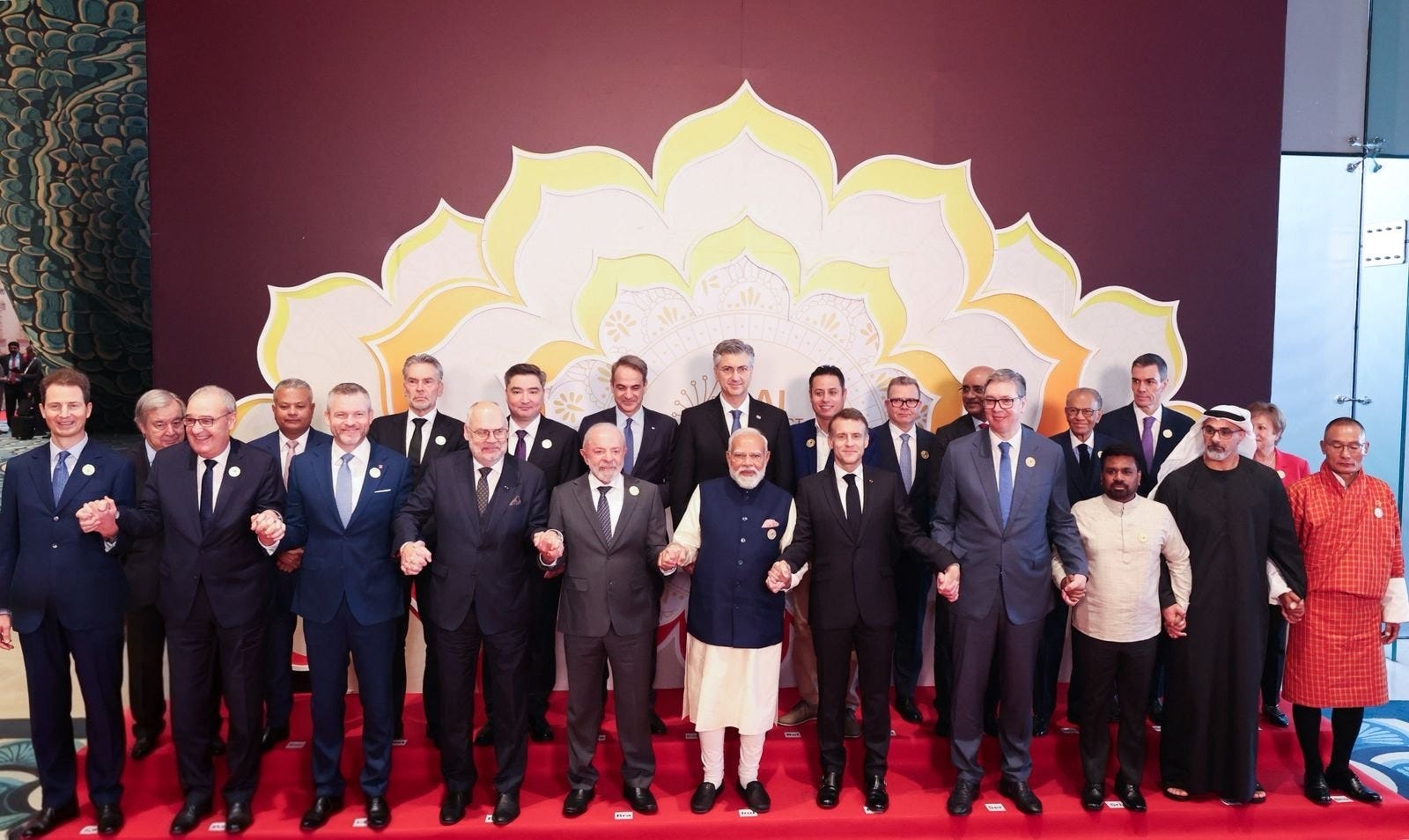
While commenting on the event’s grandeur, PM Modi said on social media, “The AI Impact Summit in Delhi has brought together the who’s who from the AI world. There is representation from over 100 countries. There are distinguished participants from every corner of the globe”.
He also added, Our aim is the same - leveraging the power of AI for the welfare of our planet.
Youth Talent Pool
The Summit marks a decisive shift from passive learning to active participation, redefining employment across sectors by highlighting emerging skill demands and the urgent need to align education with industry requirements. Its focus lies in enhancing employability, improving productivity, and creating seamless pathways from classrooms to AI-driven careers.
At the India-AI Impact Summit 2026, young innovators are driving the agenda through hands-on platforms such as innovation challenges, startup pitches, and live solution demonstrations. These structured engagements are designed to bridge the gap between skills and market demand, effectively channelling India’s youth potential into productive capacity. The Summit also catalyzes job creation in emerging sectors such as AVGC (Animation, Visual Effects, Gaming and Comics), which are projected to generate nearly 2 million jobs by 2030.
By integrating global technological insights with targeted youth skilling and employment pathways, India is positioning its demographic dividend as a central pillar of its AI-led growth strategy and future-ready workforce development.
Human-Centric AI Future
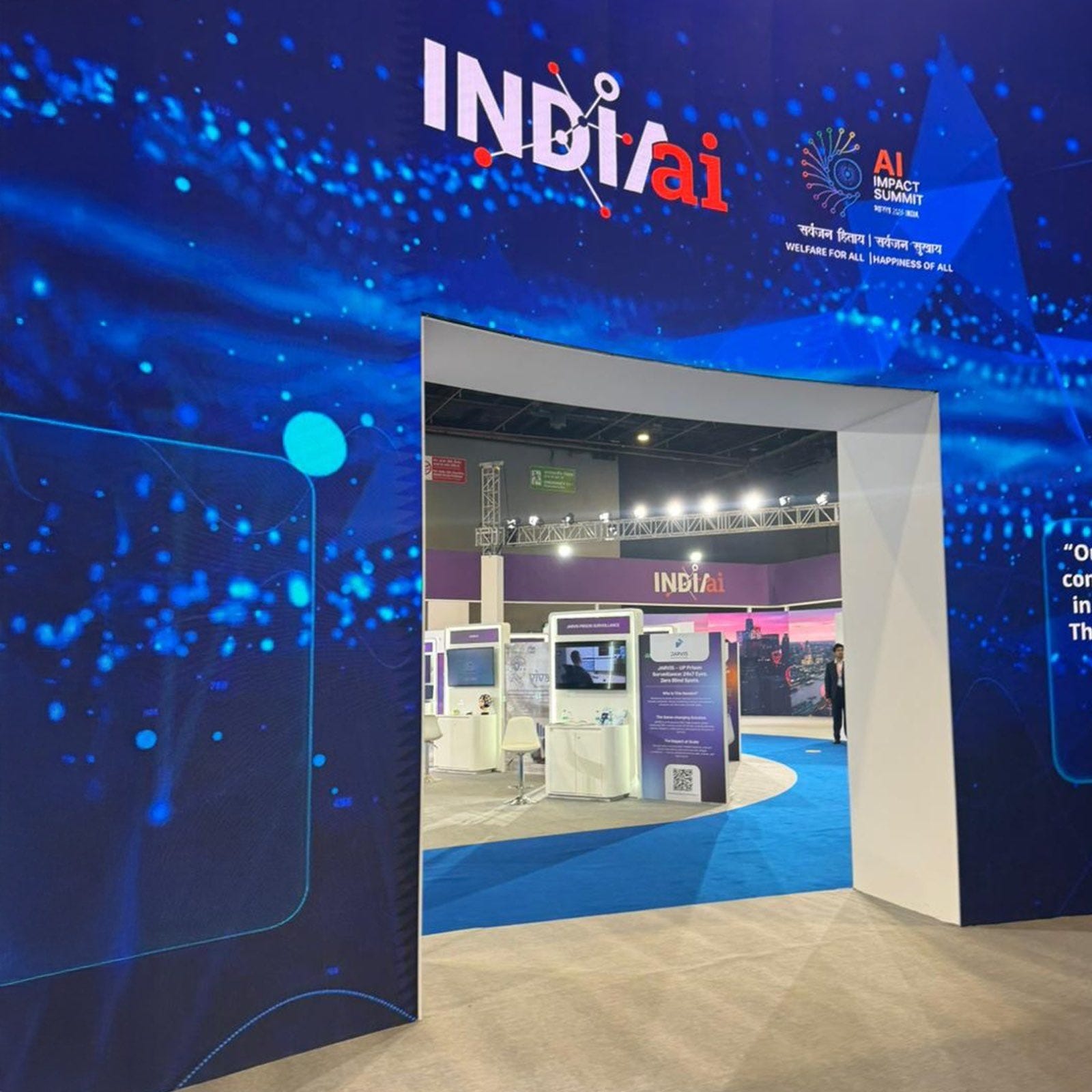
During his inaugural address at the India AI Impact Summit on February 19, Narendra Modi articulated a nuanced vision of Artificial Intelligence—not as an autonomous force driven solely by data and algorithms, but as an extension of human aspirations, ethics, and dignity. He framed this human-centric approach through the acronym M.A.N.A.V., outlining a roadmap where technological advancement progresses in alignment with societal values: Moral and Ethical Systems, Accountable Governance, National Sovereignty, Accessible and Inclusive AI, and Valid and Legitimate Systems.
India’s M.A.N.A.V. vision moves beyond a conceptual framework to reflect a sustained national commitment anchored in coordinated programmes and policy initiatives. These efforts translate guiding principles into actionable outcomes across education, digital infrastructure, governance, and innovation ecosystems—ensuring that India’s AI strategy remains inclusive, secure, and aligned with public good.
The first pillar of the M.A.N.A.V. framework underscores that AI development must be rooted in strong moral and ethical systems. Emphasising fairness, transparency, and human oversight as non-negotiable principles in AI design and deployment, the Prime Minister highlighted India’s effort to embed these values early—beginning in classrooms and extending across societal institutions.
Through M.A.N.A.V., Narendra Modi has advanced not merely a policy vision, but a civilisational perspective on artificial intelligence—one that aligns innovation with ethics, governance with accountability, sovereignty with openness, inclusion with scale, and legitimacy with trust to ensure that India’s AI future advances both technological progress and human well-being.
–
International
Turning Point in the Relationship
India-France Inaugurates a ‘Year of Innovation 2026’
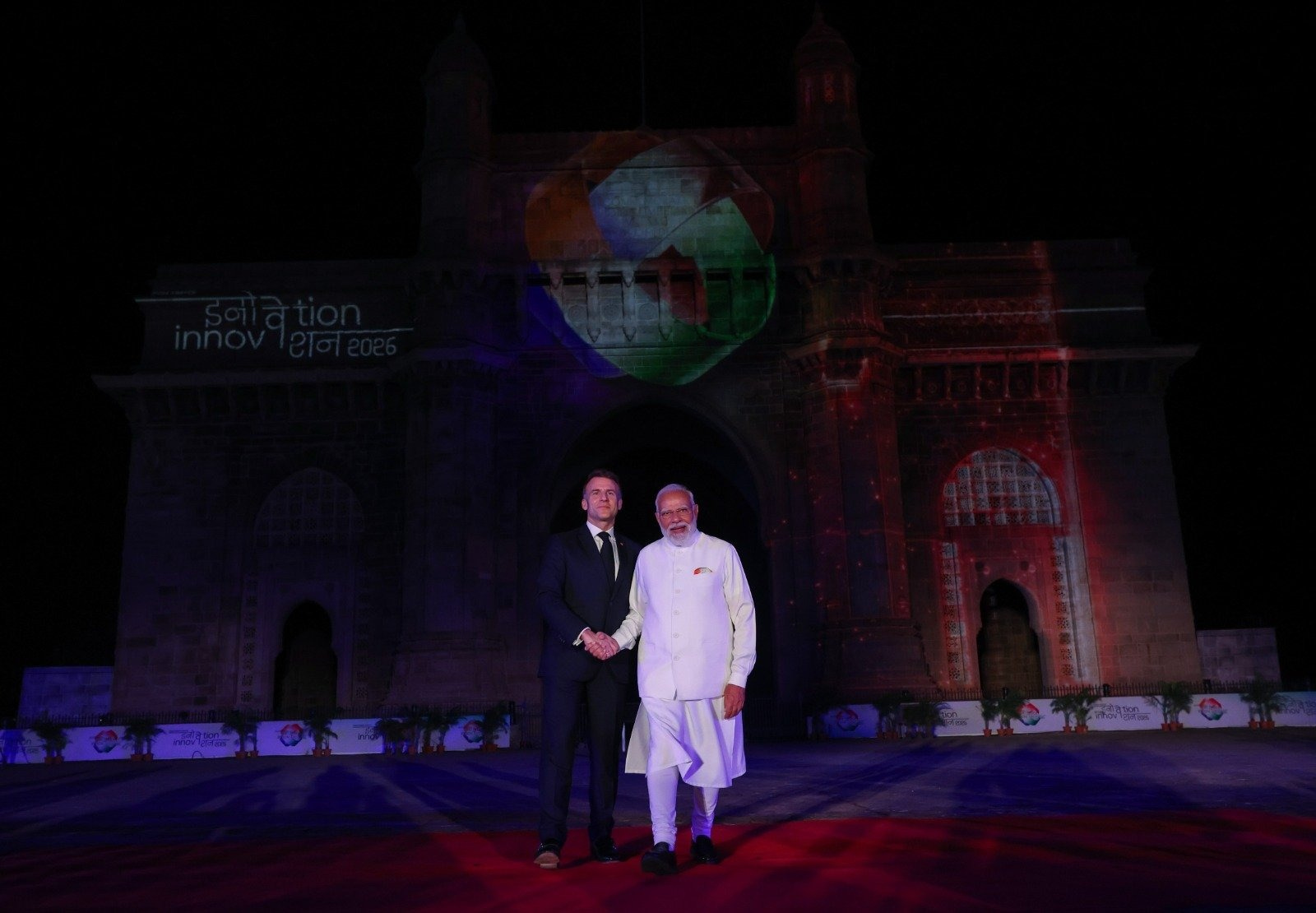
At the invitation of Hon’ble Prime Minister of India, Shri Narendra Modi, the President of the French Republic, H.E. Mr. Emmanuel Macron, undertook an official visit to India from 17 to 19 February 2026, during which he participated in the Artificial Intelligence Impact Summit 2026.
Set against the backdrop of a long-standing and steadily expanding strategic partnership, the visit reaffirmed the depth of India–France bilateral ties rooted in cooperation across defence, technology, climate action, and the Indo-Pacific. During the visit, both leaders held discussions on strengthening collaboration across a wide spectrum of areas as outlined in the Horizon 2047 Roadmap. They also deliberated on regional and global issues of mutual interest, including enhanced cooperation in the Indo-Pacific.
Both leaders held bilateral talks and jointly inaugurated the 2026 India–France Year of Innovation in Mumbai on 17 February. The visit marked President Macron’s fourth trip to India and followed Prime Minister Modi’s visit to France in February 2025.
The two leaders were in Mumbai to jointly inaugurate the India–France Year of Innovation, which is being celebrated throughout 2026 in both countries. On 19 February, Emmanuel Macron participated in the AI Impact Summit in New Delhi, further underscoring the growing convergence between India and France in shaping emerging technology partnerships.
‘Thank You’ Note
While describing his heartfelt visit to India, French President Emmanuel Macron said on social media, ‘Thank You, India’.
The French leader shared the glimpses from his trip in a 43-second montage, with the song ‘Na De Dil Pardesi Nu’ from the Hindi blockbuster ‘Dhurandhar’ playing in the background.
During his visit, both leaders agreed to upgrade bilateral ties to a “Special Global Strategic Partnership,” aimed at guiding cooperation between the two countries in the decades ahead. This elevation reflected their shared intent to position the India–France partnership as a stabilising force in the evolving global order—enhancing economic resilience, strengthening national security, and collectively responding to emerging geopolitical and technological challenges.
The two countries had previously commemorated the 25th anniversary of their Strategic Partnership in 2023, during which the Horizon 2047 Roadmap was adopted to steer bilateral engagement through to 2047—the centenary of India’s independence, diplomatic relations between India and France, and 50 years of their Strategic Partnership.
To institutionalize progress under this enhanced framework, the leaders established an annual Foreign Ministers’ Comprehensive Dialogue to review cooperation across priority areas such as economic security, global governance, and people-to-people exchanges, with a particular focus on implementing the Horizon 2047 agenda.
President Emmanuel Macron also congratulated Prime Minister Narendra Modi on India’s successful hosting of the AI Impact Summit. The Summit highlighted both the opportunities and challenges presented by AI and built upon the outcomes of the AI Action Summit hosted by France and co-chaired by the two leaders in Paris in February 2025.
Reaffirming the India–France Declaration on Artificial Intelligence, both sides reiterated their commitment to advancing secure and trustworthy AI that serves public interest and sustainable development, while emphasising the need to democratise access to AI resources and bridge the global AI divide. France also played an important role as co-chair of the Working Group on Resilience, Innovation and Efficiency.
–
New Phase in Bangladesh Politics
Tarique Rehman Sworn in as the Prime Minister of Bangladesh
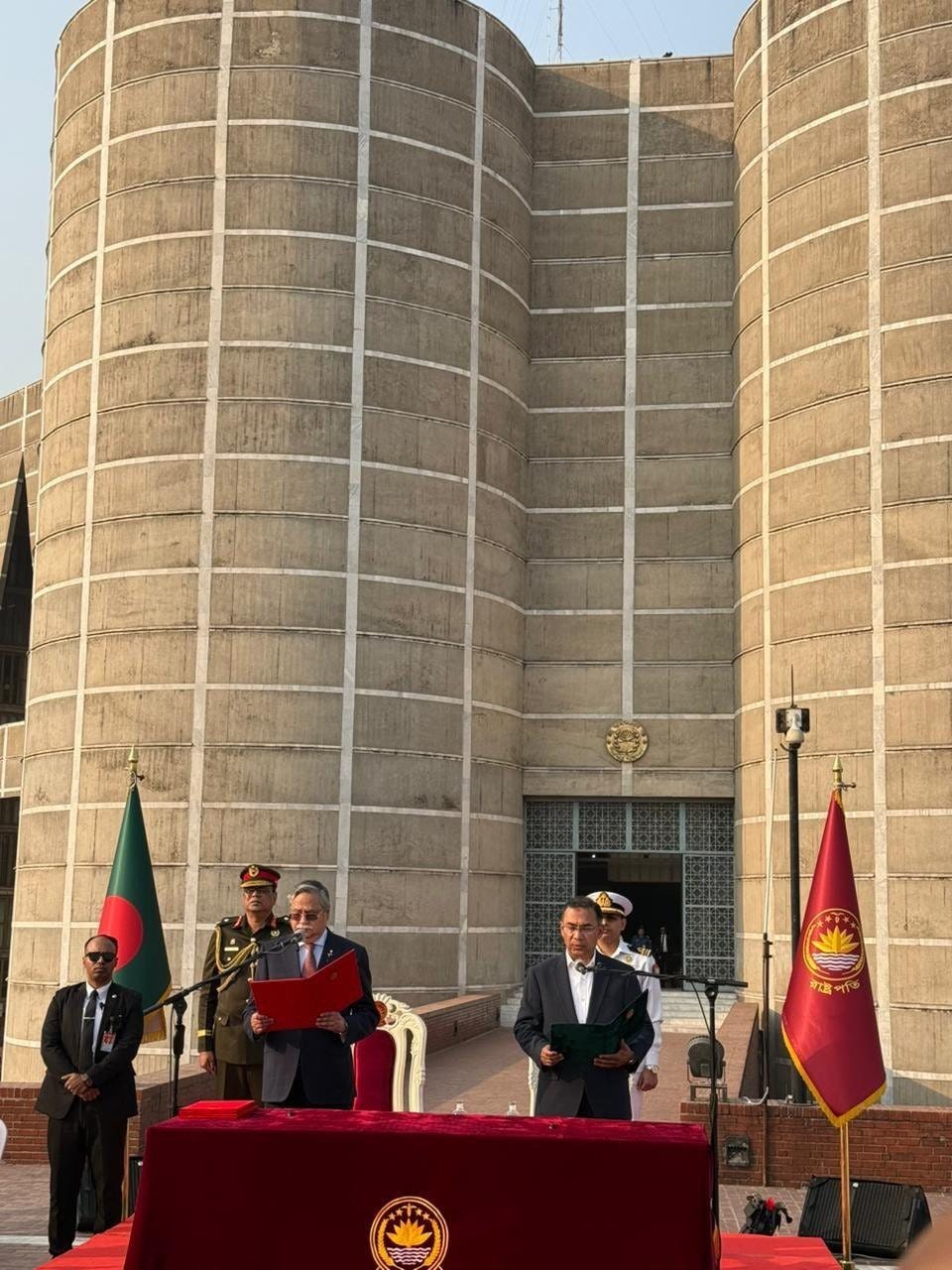
With the hope of the reestablishment of democracy in Bangladesh, Tarique Rehman, Bangladesh’s new Prime Minister, has been sworn in, marking a significant political comeback for the Bangladesh Nationalist Party (BNP) and bringing to a close the turbulent phase that followed the removal of Sheikh Hasina in 2024.
With the swearing-in of Tarique Rahman, the country has returned to an elected government after 18 months of caretaker administration led by Nobel Peace Prize laureate Muhammad Yunus.
For the BNP, this marks a return to power after two decades on the political sidelines. For Bangladesh, it represents a potential turning point—offering hope for political stability, institutional normalcy, and renewed economic momentum following a prolonged period of unrest.
The Bangladesh Nationalist Party secured a commanding two-thirds majority in last week’s election, winning 212 seats in the 300-member Jatiya Sangsad. An alliance that included the Islamist party Jamaat-e-Islami won 77 seats.
In a break from tradition, the swearing-in ceremony was held at the Parliament premises rather than inside the President’s official residence. Alongside Prime Minister Tarique Rahman, 25 cabinet ministers and 24 junior ministers also took the oath of office.
Inflation, job creation, law and order, and institutional reform are expected to dominate the early weeks of Prime Minister Tarique Rahman’s administration. Bangladesh’s garment-driven, export-led economy has slowed significantly amid global shocks, currency pressures, and prolonged domestic instability.
India’s letter to Bangladesh
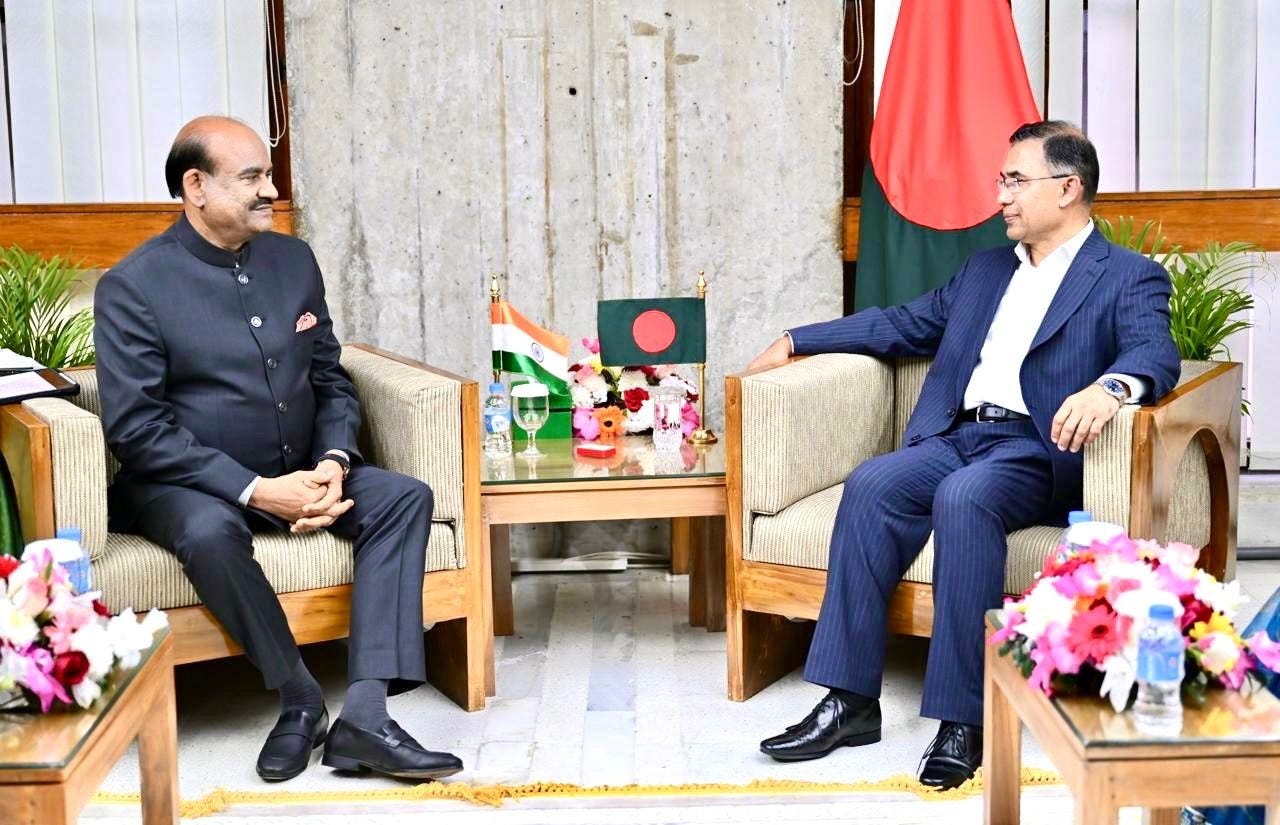
Representing India, Om Birla attended the swearing-in ceremony of Bangladesh’s new Prime Minister Tarique Rahman in Dhaka, where he delivered an invitation from Narendra Modi for Rahman to visit India.
Commenting on the swearing-in ceremony, Speaker Om Birla said on social media, “Just concluded a constructive meeting with Prime Minister of Bangladesh, Tarique Rehman. I handed over a personal letter from Prime Minister Narendra Modi, conveying his wishes to PM Rahman and inviting him to visit India at the earliest convenience”.
He also stated, I extended warm congratulations on behalf of the people of India and reaffirmed our commitment to deepening the enduring partnership between our two neighboring countries.
During the ceremony, Birla also conveyed Prime Minister Modi’s greetings to Rahman, who assumed office nearly two years after the resignation of Sheikh Hasina in the wake of mass protests. Hasina is presently in self-imposed exile in India.
Notably, Prime Minister Modi was among the first international leaders to reach out to the BNP chief following his electoral victory, signaling a possible improvement in bilateral ties after a period of strain during Bangladesh’s interim government.
- Curated by Sharayu Bapat
Research Assistant, SSRISS
Follow us: